

Advanced Mitochondrial Peptide Research for Longevity Science
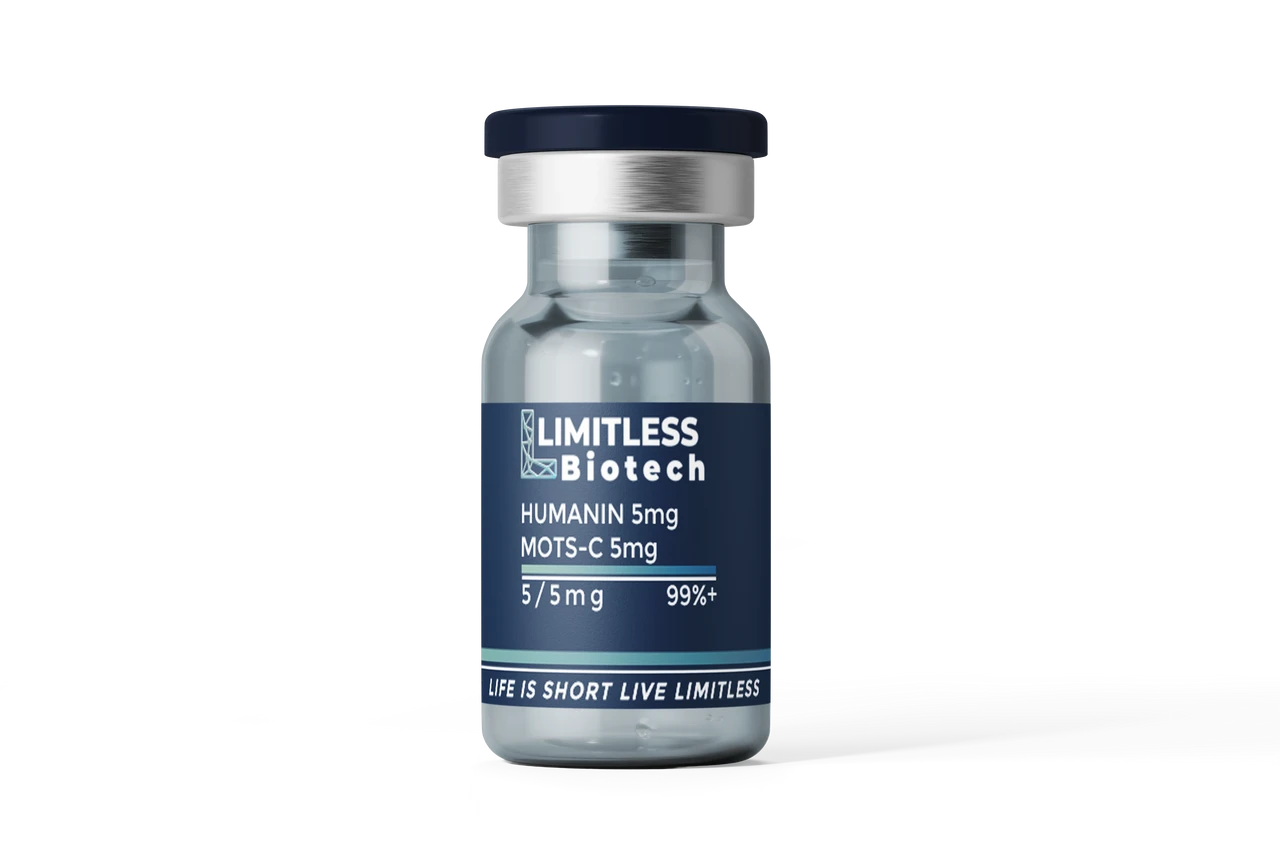
The MOTS-C/Humanin Blend is gaining significant attention in modern peptide science and mitochondrial research. This advanced peptide combination brings together two of the most recognised mitochondrial-derived peptides studied in metabolic regulation, cellular protection, energy production, and healthy ageing research.
As scientific interest in longevity and mitochondrial biology continues to grow, researchers are increasingly focused on compounds that influence cellular communication and metabolic adaptation. The MOTS-C/Humanin Blend represents a powerful area of exploration within advanced wellness and peptide science because both peptides are naturally associated with mitochondrial signalling pathways.
Researchers continue to study mitochondrial-derived peptides because of their potential importance in energy balance, cellular resilience, and biological performance. The combination of MOTS-C and Humanin has become especially relevant in modern metabolic and longevity-focused research models.
What Is the MOTS-C/Humanin Blend?
The MOTS-C/Humanin is a research-focused peptide combination containing two naturally occurring mitochondrial-derived peptides: MOTS-C and Humanin.
Both peptides are encoded within mitochondrial DNA and are studied for their connection to:
- Cellular energy regulation
- Mitochondrial communication
- Longevity and healthy ageing research
- Metabolic adaptation pathways
- Cellular resilience studies
The blend is commonly discussed in advanced peptide science because it combines two highly researched mitochondrial signalling peptides in one research-focused formulation.
Key Features of the MOTS-C/Humanin Blend
Combination of Two Mitochondrial Peptides
The blend combines MOTS-C and Humanin, both widely recognised in mitochondrial biology research.
Strong Longevity Science Relevance
Researchers study both peptides in healthy ageing and wellness-focused scientific models.
Cellular Energy and Protection Research
The blend is associated with metabolism and cellular resilience pathways.
Advanced Mitochondrial Signalling Research
Scientists explore how mitochondrial peptides influence biological communication systems.
Growing Interest in Wellness Science
The blend continues gaining recognition in metabolic and longevity research communities.
Why Researchers Study the MOTS-C/Humanin Blend
Modern biological science increasingly focuses on how mitochondria influence ageing, energy production, and cellular performance. Researchers study the MOTS-C/Humanin Blend because it combines peptides linked to multiple important biological pathways.
Metabolic Regulation Research
MOTS-C is strongly associated with metabolism and energy regulation studies.
Cellular Protection Research
Humanin is widely studied for its role in cellular resilience and biological stress response pathways.
Healthy Aging Studies
Both peptides are important in longevity and age-related biological research.
Mitochondrial Communication Analysis
Researchers investigate how mitochondrial peptides regulate communication within cells.
Wellness Optimisation Research
The blend aligns with growing scientific interest in biological performance and cellular efficiency.
Biological Functions Associated With the MOTS-C/Humanin Blend
Cellular Energy Regulation
MOTS-C is commonly studied for its role in metabolic signaling and energy balance.
Mitochondrial Communication
Both peptides contribute to mitochondrial signalling pathways within cells.
Cellular Resilience Mechanisms
Humanin is associated with pathways related to biological protection and stress response.
Metabolic Adaptation Research
Scientists study how mitochondrial peptides influence metabolic flexibility and efficiency.
Longevity-Related Biological Activity
The blend continues attracting attention in healthy ageing and wellness science.
Potential Research Applications of the MOTS-C/Humanin Blend
Longevity Science Research
Researchers study the blend in healthy ageing and lifespan-related investigations.
Metabolic Science Studies
MOTS-C/Humanin Blend is associated with energy regulation and metabolic pathway analysis.
Mitochondrial Biology Research
Scientists examine how mitochondrial peptides influence cellular communication systems.
Cellular Stress Response Studies
Humanin-related pathways are frequently explored in resilience and stress-related research.
Wellness and Biological Optimisation Research
The blend is increasingly discussed in wellness-focused scientific exploration.
Benefits of the MOTS-C/Humanin Blend in Research Contexts
Combines Two Highly Respected Peptides
The blend brings together two leading mitochondrial-derived peptides.
Strong Scientific Relevance
Both peptides are highly important in modern peptide science.
Broad Research Applications
The blend is relevant across metabolism, longevity, and mitochondrial biology studies.
Naturally Associated With Human Biology
MOTS-C and Humanin are naturally occurring mitochondrial peptides.
Growing Popularity in Advanced Wellness Science
Interest in mitochondrial optimisation continues to expand in research communities.
How the MOTS-C/Humanin Blend Fits Into Modern Peptide Science
Modern peptide science increasingly explores mitochondrial-derived peptides because of their influence on energy production, ageing, and biological communication.
The MOTS-C/Humanin Blend is commonly associated with:
- Mitochondrial signalling research
- Cellular energy studies
- Healthy aging investigations
- Metabolic optimization science
- Cellular resilience pathways
As scientific understanding evolves, mitochondrial peptides remain central to advanced wellness and biological research.
Importance of Mitochondrial Research
Mitochondria play a critical role in cellular energy production and overall biological performance. Scientists continue exploring mitochondrial peptides because they help regulate:
- Energy metabolism
- Cellular communication
- Biological adaptation
- Stress response systems
- Longevity-related pathways
The MOTS-C/Humanin Blend contributes significantly to these expanding scientific fields.
Storage Guidelines for the MOTS-C/Humanin Blend
Proper storage is essential for maintaining peptide integrity and consistency in research environments.
Recommended Storage Conditions
- Store in a cool and dry location
- Keep away from direct sunlight
- Avoid excessive heat and moisture
- Ensure containers remain tightly sealed
Laboratory Handling Recommendations
Researchers should follow standard peptide handling and storage protocols for quality and consistency.
The Future of MOTS-C/Humanin Blend Research
The future of mitochondrial peptide science continues to expand rapidly. Researchers are increasingly focused on understanding how mitochondrial signalling influences ageing, metabolism, and biological performance.
Future research areas include:
- Advanced longevity studies
- Mitochondrial communication analysis
- Cellular resilience research
- Metabolic adaptation investigations
- Wellness optimisation science
The MOTS-C/Humanin Blend is expected to remain highly important in these developing scientific areas.
Frequently Asked Questions About the MOTS-C/Humanin Blend
1. What is the MOTS-C/Humanin Blend?
It is a research-focused blend containing the mitochondrial-derived peptides MOTS-C and Humanin.
2. Why is the MOTS-C/Humanin studied?
Researchers study it for metabolism, longevity, and cellular resilience research.
3. What is MOTS-C associated with?
MOTS-C is commonly associated with metabolic regulation and cellular energy studies.
4. What is Humanin associated with?
Humanin is linked to cellular protection and healthy ageing research.
5. Are MOTS-C and Humanin naturally occurring?
Yes. Both are naturally produced mitochondrial-derived peptides.
6. Why is mitochondrial research important?
Because mitochondria regulate energy production and influence biological performance.
7. What fields study the MOTS-C/Humanin Blend?
It is studied in longevity science, metabolic research, and peptide biology.
8. How should the blend be stored?
Store it in a cool, dry place away from light, heat, and moisture.
9. Why are mitochondrial peptides gaining popularity?
Because of their growing relevance in wellness and healthy ageing science.
10. Is the MOTS-C/Humanin important in peptide science?
Yes. It combines two of the most recognised mitochondrial-derived peptides in modern research.
Final Thoughts on the MOTS-C/Humanin Blend
The MOTS-C/Humanin represents a major advancement in mitochondrial peptide science and longevity-focused research. By combining two highly studied mitochondrial-derived peptides, this blend has become increasingly important in metabolism, cellular resilience, and healthy ageing investigations.
As scientific understanding of mitochondrial signalling continues to evolve, the MOTS-C/Humanin remains central to research exploring biological optimisation, cellular communication, and wellness science. Its strong connection to modern longevity research ensures continued interest in future peptide and mitochondrial biology studies.
| Weight | 5mg/5mg, 10mg/10mg |
|---|---|
| Grade | Non Lyophilized, Premium |
1 review for MOTS-C/Humanin (Blend)
Add a review
Related products
Gastrointestinal Research

Metabolic Research

Bioregulators

Cardiovascular Research

Circadian Research

Hormonal Research

Bioregulators

Cognitive Research
Brandon Sons –
Reliable ordering process every time.