
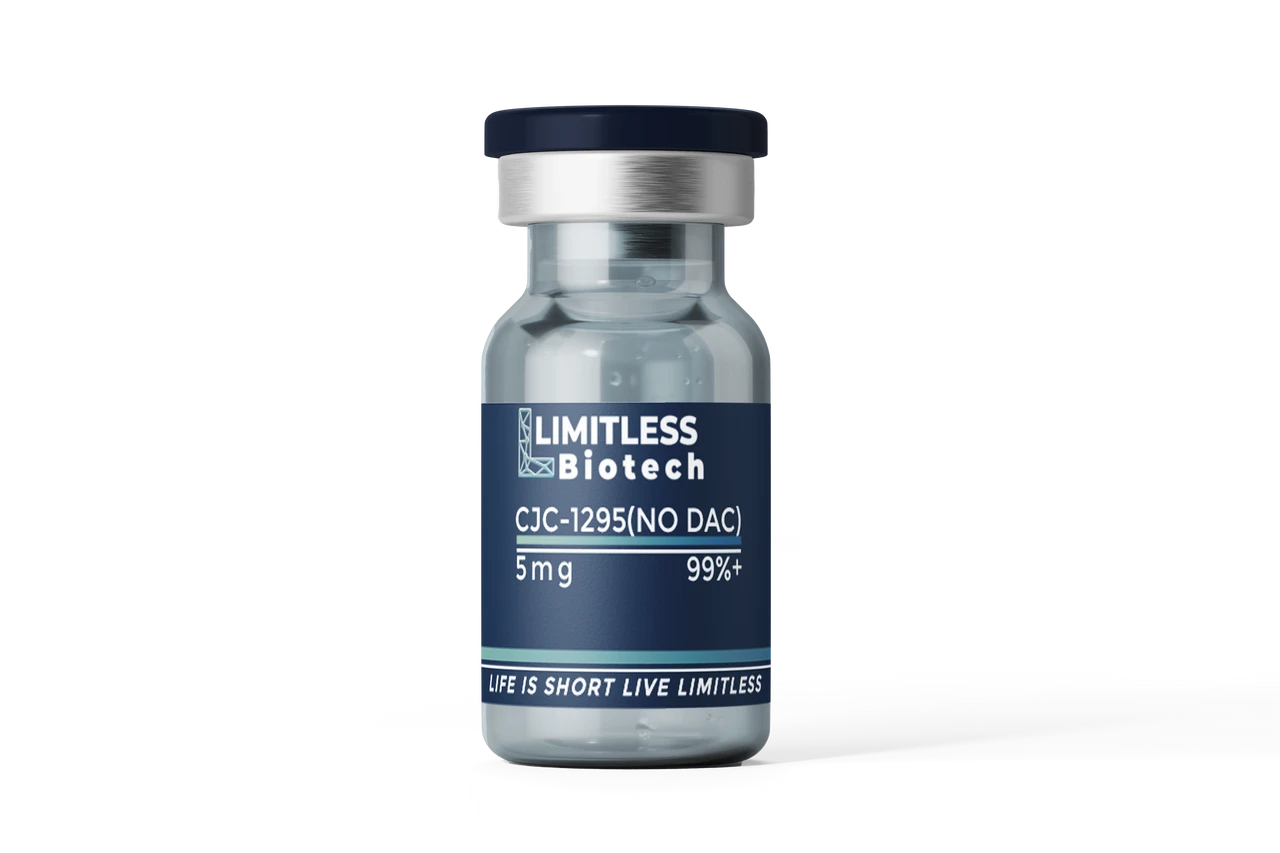


Advanced Peptide for Growth Hormone Research
CJC-1295 no DAC, also known as Mod GRF 1-29, is a well-known peptide in endocrine and growth hormone research. It is widely studied in scientific environments for its role in stimulating natural growth hormone release pathways. Unlike longer-acting analogues, this version is designed for short-acting, pulsatile research models that closely resemble natural hormone secretion patterns.
As peptide science continues to grow, CJC-1295 no DAC (Mod GRF 1-29) has become a key focus in studies related to metabolism, recovery biology, and age-related physiological changes. Its relevance in endocrine system research makes it one of the most discussed peptides in modern biochemical studies.
What Is CJC-1295 No DAC (Mod GRF 1-29)?
CJC-1295, also known as Mod GRF 1-29, is a synthetic peptide analogue of growth hormone-releasing hormone (GHRH). It is specifically designed for research into growth hormone secretion patterns in biological systems.
The “no DAC” version means it does not include Drug Affinity Complex modification, resulting in a shorter half-life and more natural pulsatile release behaviour in research models.
It is commonly associated with:
- Growth hormone research
- Endocrine system studies
- Metabolic pathway analysis
- Recovery and regeneration research
- Anti-ageing biological studies
Key Features of CJC-1295 No DAC (Mod GRF 1-29)
Short-Acting Research Peptide
Unlike extended-release versions, Mod GRF 1-29 has a short half-life, making it useful for studying natural hormone pulses.
Growth Hormone-Releasing Hormone Analogue
It mimics the action of endogenous GHRH, making it highly relevant in endocrine research.
No DAC Modification
The absence of DAC allows for rapid clearance and more natural secretion pattern studies.
Strong Scientific Interest
It is widely studied in metabolism, ageing, and hormonal regulation research.
High Relevance in Peptide Science
It remains one of the most researched peptides in growth hormone-related studies.
Why Researchers Study CJC-1295 No DAC (Mod GRF 1-29)
The peptide is widely used in research due to its ability to simulate natural growth hormone release patterns. Scientists prefer it in studies where precise hormonal timing is important.
Natural Growth Hormone Pulses
Researchers use it to study how the body naturally releases growth hormone in pulses rather than continuous secretion.
Endocrine System Research
It plays a key role in understanding how the hypothalamic-pituitary axis regulates hormone production.
Metabolic Studies
Growth hormone is closely linked to metabolism, making this peptide useful in metabolic research models.
Recovery and Regeneration Models
It is frequently studied in biological models involving tissue repair and recovery processes.
How CJC-1295 No DAC Works in Research
CJC-1295 works by mimicking the action of natural growth hormone-releasing hormone (GHRH). It binds to GHRH receptors in research models, triggering the release of growth hormone from the pituitary gland.
Mechanism in Research Context
- Stimulates GHRH receptors
- Promotes pulsatile growth hormone release
- Supports natural hormone rhythm modelling
- Used in endocrine signalling studies
Because of its short action window, researchers often study it alongside other peptides or in time-controlled experimental setups.
Potential Research Applications
Endocrinology Studies
CJC-1295 is widely used in studies examining hormonal regulation and pituitary function.
Growth Hormone Pathway Research
It is a key tool in understanding how growth hormone secretion is regulated.
Metabolic Function Studies
Researchers explore how growth hormone influences energy balance and metabolism.
Ageing and Longevity Research
It is frequently included in studies investigating age-related hormonal changes.
Cellular Regeneration Research
Growth hormone pathways are often linked to tissue repair and cellular renewal models.
Benefits of CJC-1295 No DAC in Research
Mimics Natural Hormone Release
Its short half-life allows researchers to study realistic hormone pulse patterns.
High Scientific Value
It is widely recognised in endocrine and peptide research communities.
Flexible Research Use
It can be applied in multiple experimental setups involving hormone signalling.
Strong Biological Relevance
It closely mirrors natural human hormone regulation systems.
Important in Modern Peptide Science
It remains a cornerstone peptide in growth hormone research.
How It Fits Into Modern Peptide Science
Modern peptide science focuses on understanding how peptides influence biological systems at the molecular level. CJC-1295 plays a major role in hormone regulation studies due to its naturalistic behaviour.
It is commonly associated with:
- Hormonal signalling research
- Endocrine pathway modelling
- Metabolic regulation studies
- Ageing biology research
- Recovery system analysis
As scientific tools advance, peptides like Mod GRF 1-29 continue to provide valuable insight into complex biological systems.
Importance of Growth Hormone Research
Growth hormone plays a central role in multiple biological functions, making it a major focus in biomedical research.
Researchers study:
- Hormone secretion patterns
- Metabolic regulation
- Cellular growth and repair
- Age-related hormonal decline
- Endocrine system balance
CJC-1295 no DAC, is widely used to explore these processes in controlled environments.
Storage Guidelines for CJC-1295 No DAC
Proper storage is important for maintaining peptide stability in research environments.
Recommended Conditions
- Store in a cool, dry place
- Avoid direct sunlight exposure
- Keep away from heat and moisture
- Seal tightly after use
Laboratory Handling Notes
Standard laboratory protocols should always be followed for consistency and reliability.
The Future of Growth Hormone Peptide Research
Peptide-based hormonal research continues to expand rapidly. Scientists are increasingly focused on understanding how natural hormone cycles influence metabolism, ageing, and cellular function.
Future research areas include:
- Advanced endocrine modeling
- Pulsatile hormone simulation studies
- Ageing and longevity research
- Metabolic pathway mapping
- Regenerative biology research
CJC-1295 will likely remain an important peptide in these evolving fields.
Frequently Asked Questions About CJC-1295 No DAC (Mod GRF 1-29)
1. What is CJC-1295 no DAC (Mod GRF 1-29)?
It is a short-acting peptide analogue of growth hormone-releasing hormone used in research studies.
2. Why is it called “no DAC”?
Because it does not contain the Drug Affinity Complex modification, it is short-acting.
3. What is it used for in research?
It is used in studies involving growth hormone secretion, metabolism, and endocrine function.
4. How does it differ from CJC-1295 with DAC?
The no DAC version is short acting, while the DAC version is long acting.
5. Why is growth hormone studied?
It plays a major role in metabolism, ageing, and cellular repair processes.
6. What is Mod GRF 1-29?
It is another name for CJC-1295 no DAC, a GHRH analogue.
7. Is it naturally occurring?
No. It is a synthetic peptide designed for research purposes.
8. How is it used in studies?
It is used in controlled laboratory environments to study hormone signalling.
9. Why is pulsatile release important?
Because it mimics the body’s natural hormone secretion patterns.
10. What fields study this peptide?
Endocrinology, biochemistry, peptide science, and metabolic research.
CJC-1295 no (Mod GRF 1-29) is a highly important peptide in modern endocrine and growth hormone research. Its short-acting nature makes it especially valuable for studying natural hormone secretion patterns and biological regulation systems.
As peptide science continues to advance, this compound remains a key tool in understanding metabolism, ageing, and hormonal signalling. Its role in research ensures it will continue to be relevant in future scientific and biomedical studies.
| Weight | 5mg, 10mg |
|---|---|
| Grade | Premium |
1 review for CJC-1295 no DAC (Mod GRF 1-29)
Add a review
Related products

Gastrointestinal Research
Dermatological Research

Peptide Capsules
Healing and Repair Research Blend (BPC-157, TB4 Frag 1-4, GHK-Cu)

Metabolic Research

Bioregulators
Cardiovascular Research

Musculoskeletal Research

Cardiovascular Research
Boris Gruffe –
Customer service exceeded expectations.